
Winner · Dentistry Subject Award 2026
Mariano Sanz
“Treatment of stage IV periodontitis: The EFP S3 level clinical practice guideline”
The finalists
Ten universities. Ten projects. Ten academics.
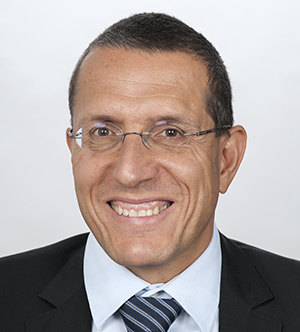
Anton Sculean
Prevention and treatment of peri-implant diseases-The EFP S3 level clinical practice guideline
Professor Sculean chairs the Department of Periodontology at the University of Bern School of Dental Medicine, focusing on periodontal regeneration and wound healing. He co-authored the 2023 EFP S3 level clinical practice guideline on prevention and treatment of peri-implant diseases, a pan European multi institution consensus guiding clinicians across the continent.

Falk Schwendicke
Deep caries management: EFCD-ESE-ORCA S3-level clinical practice guideline
Professor Schwendicke directs the Department of Conservative Dentistry and Periodontology at LMU University Hospital Munich, working on cariology, digital dentistry and artificial intelligence. He led the EFCD, ESE and ORCA S3 level clinical practice guideline on deep caries management, a multi institution European collaboration setting evidence based standards for preserving tooth vitality.
Mariano Sanz
Treatment of stage IV periodontitis: The EFP S3 level clinical practice guideline
Professor Sanz chairs periodontology at Universidad Complutense de Madrid and leads the ETEP research group on the aetiology and therapy of periodontal diseases. He co-authored the 2022 EFP S3 level clinical practice guideline for treatment of stage IV periodontitis, an international multi institution consensus shaping periodontal care worldwide.
Reinhilde Jacobs
Mapping every tooth in a three-dimensional scan by hand is slow, painstaking work. The project examines the use of artificial intelligence to segment individual teeth in three dimensions from cone-beam computed tomography scans, with the aim of making this imaging task both fast and accurate.
Bruce J. Paster
Gum disease and metabolic syndrome, a cluster of conditions that raises cardiovascular risk and doubles the risk of type 2 diabetes, turn out to be closely linked. Reviewing the evidence, the work shows most studies point to an association in which periodontitis can contribute to or worsen metabolic syndrome, and examines the roles of lipids, inflammatory cytokines and the salivary microbiome.
Shayan Barootchi
Alveolar ridge preservation: Complications and cost‐effectiveness
After a tooth extraction, procedures to preserve the jaw ridge are routinely used in clinical practice, yet their complications and value for money have received far less attention than their efficacy. The study assesses the complications associated with different preservation approaches and models their cost-effectiveness, concluding that spending more on certain bone graft materials does not translate into greater effectiveness.
Julián Conejo
Temporary crowns and bridges are increasingly 3D printed, so their materials deserve close scrutiny. Comparing three commercially available printing resins with an experimental resin intended for definitive prostheses, the study characterised mechanical and biological properties using methods from biaxial flexural testing and finite element analysis to cell proliferation and cytotoxicity assays.
Pieter-Jan Verhelst
Layered deep learning for automatic mandibular segmentation in cone-beam computed tomography
The project applies layered deep learning to automatically segment the mandible, the lower jawbone, in cone-beam computed tomography scans. By automating this delineation task, the work explores how artificial intelligence can support the analysis of three-dimensional imaging used in dental care.
Marta Revilla‐León
Artificial intelligence applications in implant dentistry: A systematic review
How well do artificial intelligence models actually perform in implant dentistry? Searching five databases, the team systematically reviewed studies that use AI for recognising implant types, predicting implant success from patient risk factors, and optimising implant design in combination with finite element analysis, documenting a fast-growing area that had not previously been systematically analysed.
Frauke Müller
Could a digitally made denture serve patients as well as a conventionally made one? Synthesising seventy-three studies, the review compares CAD-CAM milled and 3D-printed complete dentures with conventionally constructed ones across trueness of fit, biocompatibility, mechanical and surface properties, colour stability, time and cost, and clinical and patient-reported outcomes.
Exclusive to partners
The 2026 Subject Awards have been decided.
Partners verify their data and feature their academics. Finalists were identified from open data; winners were decided by our editorial team and announced on 15 September 2026.
Explore partnership →The wider slate
The wider slate: more candidate partnerships behind the finalists.
The perception of COVID-19 among Italian dental patients: an orthodontic point of view
Peri‐implantitis: Summary and consensus statements of group 3. The 6th EAO Consensus Conference 2021
Pathogenesis of periodontitis - A potential role for epithelial-mesenchymal transition