Winner · Chemistry Subject Award 2026
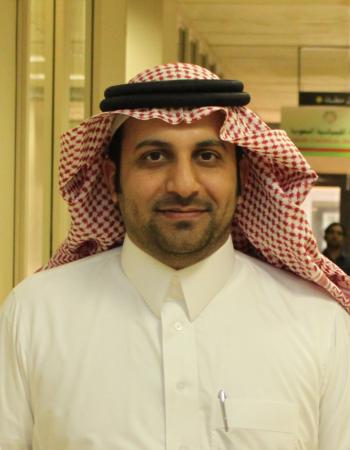
Zeid A. ALOthman
The finalists
Ten universities. Ten projects. Ten academics.
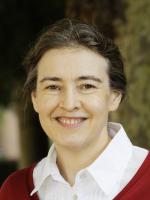
Clare P. Grey
Revisiting metal fluorides as lithium-ion battery cathodes
Professor Dame Clare Grey applies nuclear magnetic resonance and diffraction methods to battery materials. Her multi-institution study with colleagues at Manchester, Rutgers and Oxford revisited metal fluoride cathodes for lithium-ion batteries, showing that lithiation proceeds by diffusion controlled displacement rather than reconstructive phase transitions, guiding the design of higher capacity electrodes.
Lingjie Sun
Rather than making and breaking chemical bonds, organic cocrystal engineering combines two or more molecules held together by noncovalent intermolecular interactions. The work sets out the definition and advantages of this approach to creating enhanced organic functional materials, addresses key questions about intermolecular forces and cocrystal function, and surveys recent developments in the field.
Vivian Wing‐Wah Yam
Supramolecular materials assemble themselves through noncovalent forces such as hydrogen bonding, and metal-metal interactions have emerged as an unconventional addition to that toolkit. Exploring how these interactions can guide the design and construction of self-assembled metal-based materials with rich spectroscopic functionalities, the work aims to stimulate new research directions despite the challenge of controlling such hierarchical architectures.
Martin Schröder
Analysis and Refinement of Host-Guest Interactions in Metal-Organic Frameworks
Metal-organic frameworks are porous crystalline materials whose adjustable pores make them promising for gas adsorption and separation, substrate binding and catalysis, applications relevant to climate change, energy and pollution. Analysing and refining the host-guest interactions within these frameworks, the work shows how precisely engineered pore environments can be understood and improved.
Zeid A. ALOthman
Professor ALOthman leads the Advanced Materials and Chromatography Group at King Saud University, where he is Dean of the College of Science. His collaborative work with researchers in Malaysia, Iraq, Jordan and Canada characterised natural Iraqi bentonite clay as a low cost adsorbent for removing toxic cationic dyes from water, informing practical wastewater treatment.
F. Dean Toste
Spreading a precious metal across a support as isolated single atoms can combine the precision of molecular catalysis with the convenience of a solid. This work reports a heterogeneous iridium single-atom-site catalyst for carbenoid insertion into oxygen-hydrogen bonds, achieving high regioselectivity in a reaction where controlling where the bond forms is the difficulty.
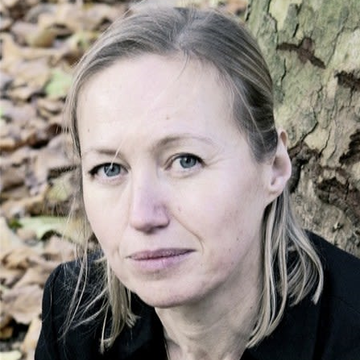
Veronique Gouverneur
Fluorochemicals from fluorspar via a phosphate-enabled mechanochemical process that bypasses HF
Waynflete Professor of Chemistry at Oxford, Veronique Gouverneur pioneers sustainable fluorine chemistry. Working with collaborators at UCL and Colorado State University, her team converted fluorspar directly into a solid fluorinating reagent through a phosphate enabled mechanochemical process, bypassing hazardous hydrogen fluoride and opening safer routes to pharmaceuticals, agrochemicals and battery fluorochemicals.
Jamie A. Leitch
Fluorochemicals from fluorspar via a phosphate-enabled mechanochemical process that bypasses HF
Every fluorochemical currently traces back to hydrogen fluoride, a highly toxic and corrosive gas made from fluorspar under harsh conditions. Inspired by calcium phosphate biomineralisation, the team grind fluorspar with dipotassium hydrogen phosphate to give a solid containing crystalline phases suitable for forging sulfur-fluorine and carbon-fluorine bonds, bypassing hydrogen fluoride altogether.
Ben Zhong Tang
A Sensitive and Reliable Organic Fluorescent Nanothermometer for Noninvasive Temperature Sensing
Measuring temperature inside a living cell calls for a thermometer far smaller than the cell itself. The team built one from a dual-responsive organic luminogen encapsulated in natural saturated fatty acids, whose sharp melting points and rapid reversible phase transitions translate heat into a change in fluorescence, then formulated the composite into dispersed nanoparticles for biological use.
Magnus Rueping
Forming carbon-carbon bonds by coupling two electrophiles has become a valuable synthetic tool, and this minireview surveys where it now stands. It explains the current state of the art in nickel-catalysed reductive cross-couplings and highlights the openings created by the emerging fields of photoredox catalysis and electrochemistry.
Exclusive to partners
The 2026 Subject Awards have been decided.
Partners verify their data and feature their academics. Finalists were identified from open data; winners were decided by our editorial team and announced on 15 September 2026.
Explore partnership →The wider slate
The wider slate: more candidate partnerships behind the finalists.
Metal-organic frameworks (MOFs) based nanofiber architectures for the removal of heavy metal ions
Photocontrolled RAFT polymerization: past, present, and future
Photocontrolled RAFT polymerization: past, present, and future
Macroscopic MOF Architectures: Effective Strategies for Practical Application in Water Treatment
MOF-enabled confinement and related effects for chemical catalyst presentation and utilization
How Reproducible are Surface Areas Calculated from the BET Equation?
Early Release Science of the exoplanet WASP-39b with JWST NIRSpec G395H
Early Release Science of the exoplanet WASP-39b with JWST NIRSpec G395H
Electrophilic reactivities of cyclic enones and α,β-unsaturated lactones
Diagnostics and correction of batch effects in large‐scale proteomic studies: a tutorial