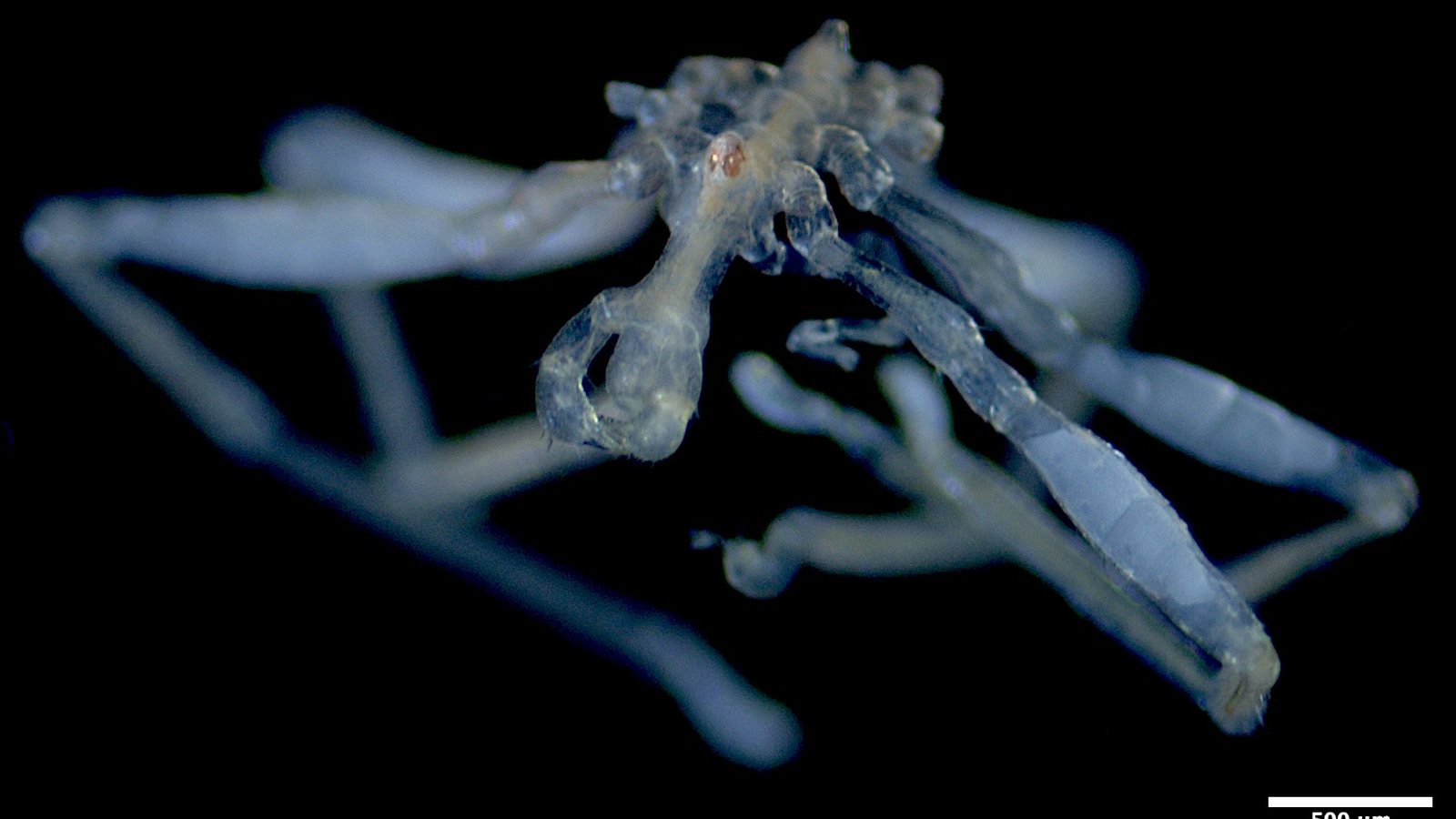
Two new sea spider species found in the Salish Sea, the first in almost a century
A UBC zoology study combining detailed imaging and DNA analysis has described two new sea spiders, including a hairy-legged, red-eyed species named for its 'hairy feet'.
Researchers at the University of British Columbia have described two new species of sea spider in the Salish Sea, the first new species from the region in almost a century. The work, published in Organisms Diversity & Evolution, was led by Cormac Toler-Scott as part of his master's degree in zoology, and helps fill a gap in knowledge of a poorly understood group of marine animals.
Specimens were collected between September 2023 and August 2024 on dives up to 18 metres deep at sites including Quadra Island, Vancouver, Bamfield and Victoria. Callipallene pilosuspedes, named from the Latin for 'hairy feet', has red eyes, curved leg spines and nimble limbs it uses to groom itself. Only one specimen was found.
The second species, Tanystylum kiixin, is named after an ancient Indigenous village site near where it was first collected. It cannot groom itself well, and was often covered in tiny parasites of its own. The team also sequenced several species for the first time and produced an identification guide to the region's sea spiders.
Toler-Scott began the project wanting to understand how climate change and human disturbance affect sea spiders, but found little was known about which species live there. "In order to understand how marine invertebrates are being impacted by things like climate change and how we can better protect these key elements of the ecosystem, we have to be able to identify them," he said.
Source: the original release from University of British Columbia, reporting research published in Organisms Diversity & Evolution. Summarised by GRP Research News.
For universities
The GRP Partnership Intelligence Platform
Your university beside the peers you choose, across both GRP indices: the universities and companies your peers work with that you do not, live funding calls matched to your strengths, the EU projects your peers have won, and a brief ready for your executive. A partner service now onboarding founding partner universities: enquire, and the GRP team will confirm availability and pricing for your university.