Automated system lets MIT chemists dial in the size and shape of RNA drug carriers
An automated two-step mixing platform produces lipid nanoparticles to a chosen size, which could shorten the development of new RNA and DNA therapies.
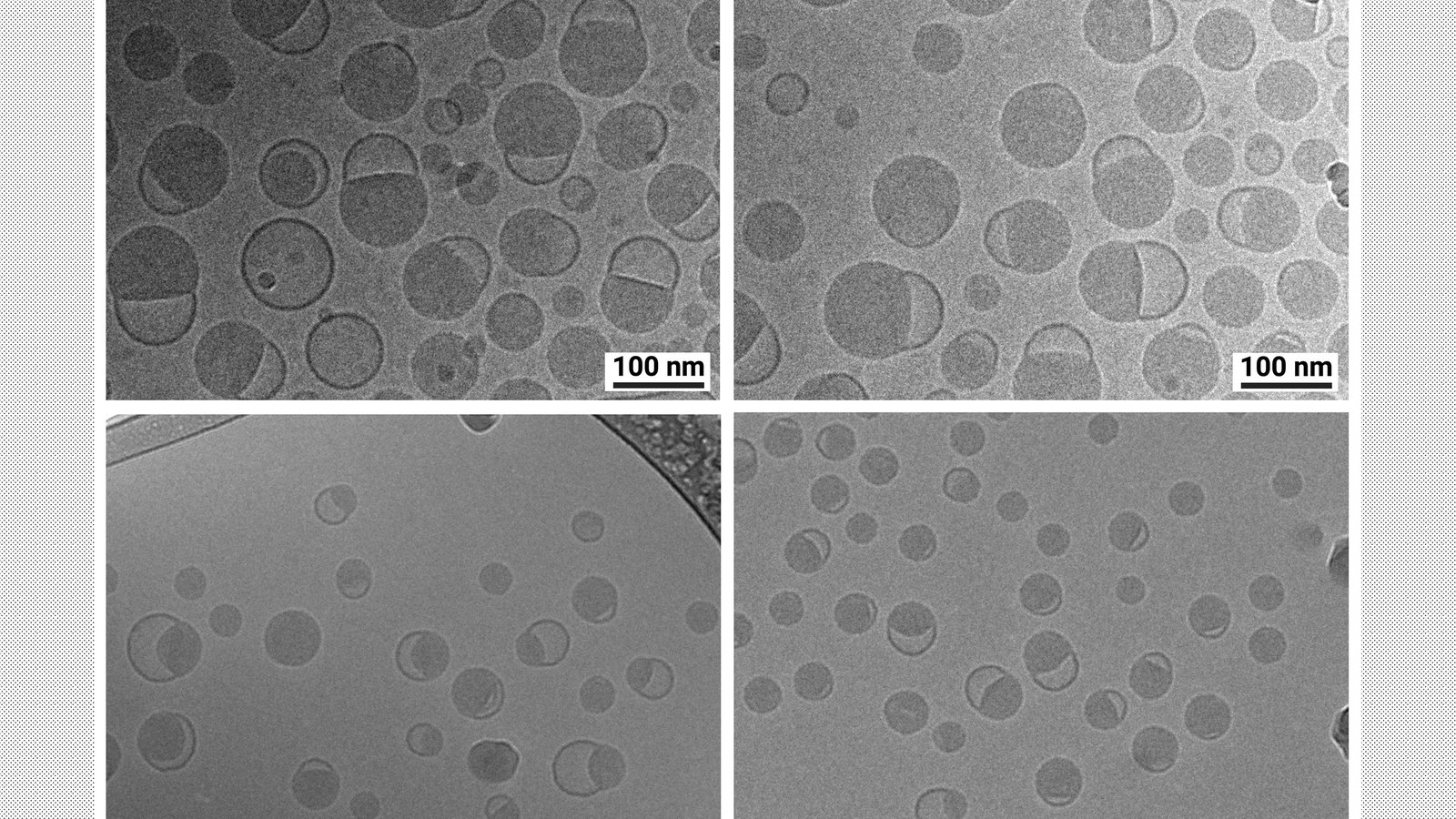
RNA vaccines and other nucleic acid medicines are carried into the body inside lipid nanoparticles, tiny fatty packages that stop the fragile cargo from being broken down. Researchers at MIT have developed an automated way to make these particles far more quickly, with precise control over their size and shape. The work appears in ACS Nano.
The method builds on the team's earlier finding that mixing lipids and mRNA in two steps, with a short delay before extra buffer halts particle growth, sets particle size, while changing the buffer's concentration can turn spheres into elongated shapes. The new system automates that process, measures particles as they form using dynamic light scattering, and adjusts the conditions until it hits a requested size.
The study was led by postdocs Cedric Devos, Aniket Udepurkar and Peter Sagmeister, with Allan Myerson of MIT's Department of Chemical Engineering as senior author. Data from the experiments were used to train a machine-learning model that predicts which settings will give a particular size or shape. "The size and shape of LNPs could not be reliably controlled by any previous production method," Myerson said.
Particle size matters because it influences where in the body a therapy ends up, so tuning it could help developers target particular organs and tissues without the slow trial and error of current methods. The researchers have filed for a patent and are working to commercialise the technology through a new company, BIZON Labs. The research was funded by the US Food and Drug Administration and the National Cancer Institute.
Source: the original release from Massachusetts Institute of Technology, reporting research published in ACS Nano. Summarised by GRP Research News.
For universities
The GRP Partnership Intelligence Platform
Your university beside the peers you choose, across both GRP indices: the universities and companies your peers work with that you do not, live funding calls matched to your strengths, the EU projects your peers have won, and a brief ready for your executive. A partner service now onboarding founding partner universities: enquire, and the GRP team will confirm availability and pricing for your university.