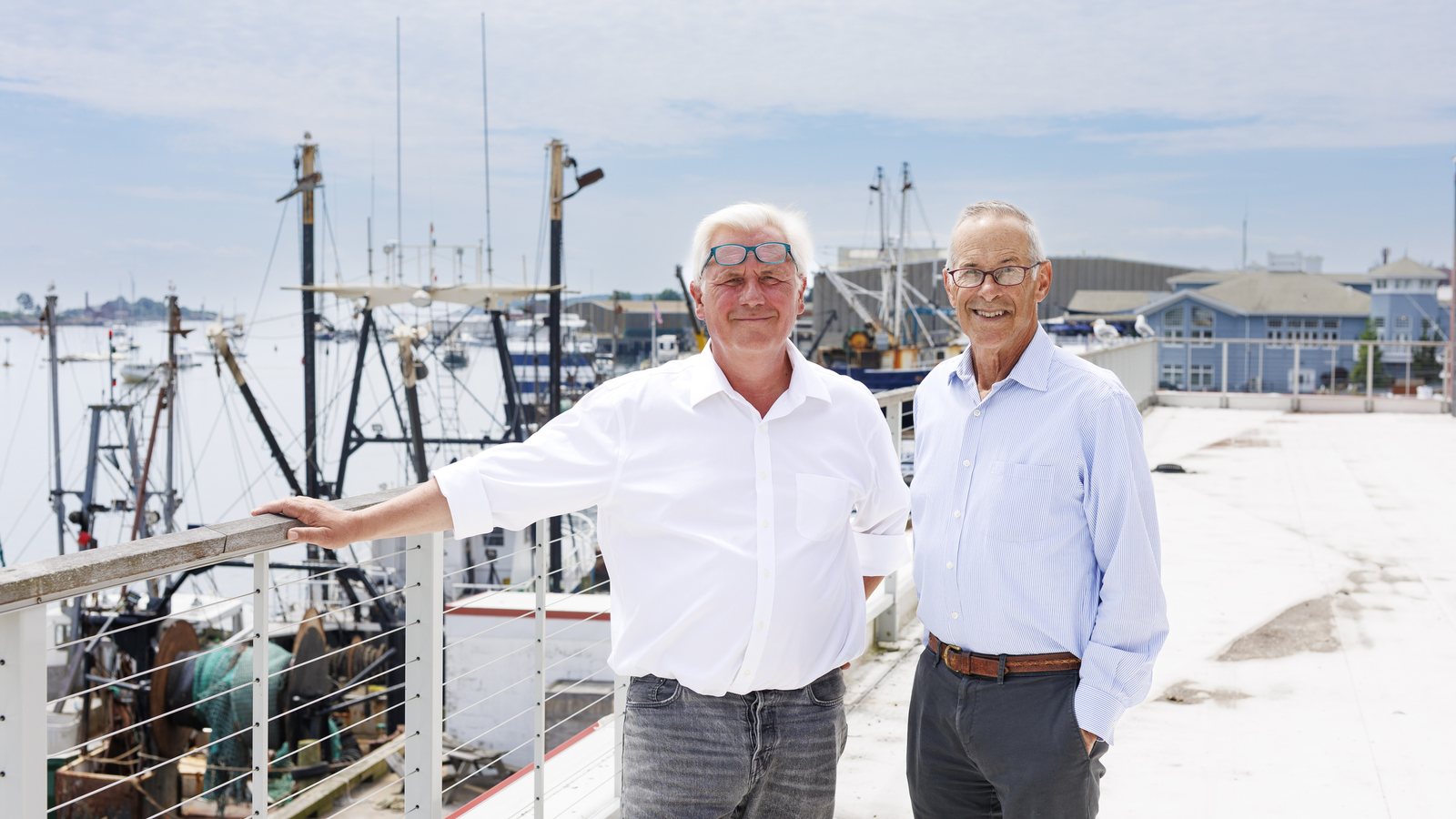
A former eel plant on Gloucester harbour now hosts a marine genomics institute
Harvard scientists helped found the Gloucester Marine Genomics Institute, which uses genetics to support fisheries, study long-lived sea creatures and train local lab technicians.
In a converted eel processing plant on the waterfront of Gloucester, Massachusetts, the Gloucester Marine Genomics Institute uses genetics to support healthy fisheries and to ask what marine life can teach us about human health. The nonprofit grew from a 2012 idea by state representative Ann-Margaret Ferrante: that genomic sequencing could track Atlantic cod stocks more accurately. Early tests found genetically distinct spawning groups in the Gulf of Maine and on Georges Bank.
The institute's founders include David Walt, Hansjörg Wyss Professor of Bioinspired Engineering at Harvard Medical School, and Marc Vidal, professor of genetics at Harvard Medical School and Dana-Farber Cancer Institute, along with Greg Verdine and local developer Sheree O'Reilly. Science Director Andrea Bodnar's team studies the sea urchin genome to learn how the animals live upward of 100 years without showing signs of ageing.
Researcher Stephen Treaster compares the ocean quahog, the longest-lived noncolonial animal, with the dwarf goby, the shortest-lived vertebrate, to find genetic variations behind their very different lifespans. The institute also analyses environmental DNA, extracting traces that sea creatures leave in samples from the ocean floor, a tool increasingly accepted by fisheries managers. "We want to do science and provide information for others," said Vidal.
Alongside its research, the institute launched the Gloucester Biotechnology Academy in 2016 to train young adults as entry-level laboratory technicians, teaching practical lab skills alongside time management and communication. Some graduates now work at the institute, and the academy plans to expand to Boston's Seaport in 2027. The founders hope the city, once the largest fishing hub in the United States, can become a centre for marine science.
Source: the original release from Harvard University. Summarised by GRP Research News.
For universities
The GRP Partnership Intelligence Platform
Your university beside the peers you choose, across both GRP indices: the universities and companies your peers work with that you do not, live funding calls matched to your strengths, the EU projects your peers have won, and a brief ready for your executive. A partner service now onboarding founding partner universities: enquire, and the GRP team will confirm availability and pricing for your university.