
Winner · Biochemistry, Genetics & Molecular Biology Subject Award 2026
Aarno Palotie
“FinnGen provides genetic insights from a well-phenotyped isolated population”
The finalists
Ten universities. Ten projects. Ten academics.
Claudia Langenberg
Strengthening the Reporting of Observational Studies in Epidemiology Using Mendelian Randomization
Genetic variation can be used to test whether a modifiable exposure really causes a health outcome, an approach known as Mendelian randomisation. This work develops STROBE-MR, a reporting guideline drafted by a group of 17 experts as a stand-alone extension of the established STROBE statement, so that such studies can be described transparently enough for others to appraise.
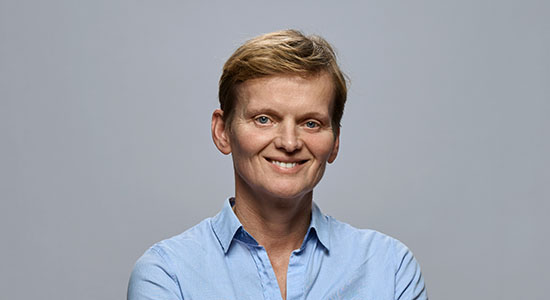
Ruth Loos
A saturated map of common genetic variants associated with human height
Professor Loos leads the Loos Group at Copenhagen's Novo Nordisk Foundation Center for Basic Metabolic Research, studying the genetics of obesity and metabolic disease. She co-authored the 2022 Nature saturated map of common variants for human height, a landmark GIANT consortium collaboration spanning hundreds of institutions and millions of genomes.
Michael V. Holmes
Written as a primer, the work sets out Mendelian randomisation: the use of inherited genetic variation to investigate whether an exposure influences a health outcome. It is aimed at readers meeting the method for the first time, describing the reasoning behind it and how studies of this kind are designed and interpreted.
Aarno Palotie
FinnGen provides genetic insights from a well-phenotyped isolated population
Professor Palotie is Research Director of the Human Genomics programme at the Institute for Molecular Medicine Finland, University of Helsinki, and Scientific Director of FinnGen. The 2023 Nature FinnGen flagship paper he co-authored combined genomic and health registry data from 500,000 Finns across universities, hospitals and biobanks to reveal new disease associated variants.
Christine Orengo
The work reports recent developments to InterPro, a freely accessible database that classifies protein sequences into families and identifies functionally important domains and conserved sites. Alongside updates that keep the resource in step with the rapid growth of protein sequence data and make it easier to use, the team even developed a card game to engage the non-scientific community.
Mathias Uhlén
A single-cell type transcriptomics map of human tissues
Knowing which genes are switched on in which cells is basic to understanding the body, and this study builds a high-resolution map. Combining single-cell transcriptomics with spatial, antibody-based protein profiling, the team created an open access atlas covering 192 individual cell type clusters and classified how many genes are elevated in each.
Evropi Τheodoratou
Guidelines for performing Mendelian randomization investigations: update for summer 2023
Rigorous methods need clear standards, and this work provides them for Mendelian randomisation investigations. Its guidelines span ten areas, from motivation and data sources through choice of genetic variants to analysis, presentation and interpretation, supporting both practitioners writing up their findings and the journal editors and reviewers who assess them, with regular updates promised as the field advances.
Marinka Žitnik
Scientific discovery in the age of artificial intelligence
Artificial intelligence is reshaping how science is done, and this Nature paper examines discovery in that new age. Drawing on collaboration across six countries, the work considers what AI means for the practice of research itself, a question that reaches into every field of science.
Giovanni E. Mann
Defining roles of specific reactive oxygen species (ROS) in cell biology and physiology
Reactive oxygen species have long been treated as a single category, and this review works towards defining what particular species do in cell biology and physiology. The aim is greater precision: distinguishing the roles of individual reactive oxygen species inside cells rather than describing them collectively, which shapes how their effects can be studied.
Justin Stebbing
PI3K/AKT/mTOR signaling transduction pathway and targeted therapies in cancer
One signalling network sits behind a great deal of cancer biology, and this review takes stock of it. The work describes how dysregulation of the PI3K/AKT/mTOR axis, the most frequently activated signalling pathway in human cancer, contributes to disease progression and resistance to treatment, and discusses results obtained with inhibitors of PI3K, AKT and mTOR.
Exclusive to partners
The 2026 Subject Awards have been decided.
Partners verify their data and feature their academics. Finalists were identified from open data; winners were decided by our editorial team and announced on 15 September 2026.
Explore partnership →The wider slate
The wider slate: more candidate partnerships behind the finalists.
Accurate prediction of protein structures and interactions using a three-track neural network
Mapping genomic loci implicates genes and synaptic biology in schizophrenia
Towards complete and error-free genome assemblies of all vertebrate species
Mapping genomic loci implicates genes and synaptic biology in schizophrenia
Mapping genomic loci implicates genes and synaptic biology in schizophrenia
Mapping genomic loci implicates genes and synaptic biology in schizophrenia
New insights into the genetic etiology of Alzheimer’s disease and related dementias
New insights into the genetic etiology of Alzheimer’s disease and related dementias
Accurate prediction of protein structures and interactions using a three-track neural network
Mapping genomic loci implicates genes and synaptic biology in schizophrenia
Strengthening the Reporting of Observational Studies in Epidemiology Using Mendelian Randomization
A genomic mutational constraint map using variation in 76,156 human genomes
FinnGen provides genetic insights from a well-phenotyped isolated population
← All subject awards · The full Biochemistry, Genetics & Molecular Biology index →